Gorean cities are often imagined from the top down. We picture ubars and councils, high castes debating law and honor beneath banners and stone. These scenes are visible, dramatic, and easy to recognize. But they are not what make a city function.
A well-built city stands from the bottom up.
Low castes are the foundation upon which everything else rests. They are not decorative. They are not optional. And they are not, as is so often assumed, dull or secondary to play. In truth, they are where some of the most immersive and rewarding roleplay in Gor actually lives.
Foundations are interesting because they are always under pressure.
Low-caste roles live where intention meets reality. A city may declare prosperity, but a baker knows when the grain is poor. A council may speak of peace, but a blacksmith sees how many blades need repair. A household may claim stability, but a seamstress knows how often clothing must be mended rather than replaced. These roles experience consequence first, not last.
That is what makes them powerful to play.
A baker does not need authority to shape a city’s mood. Bread is daily. When loaves grow smaller, when ovens stay lit late into the night, when flour is stretched thin, the city feels it immediately. A baker’s decisions ripple outward without speeches or threats. Hunger does not need explanation.
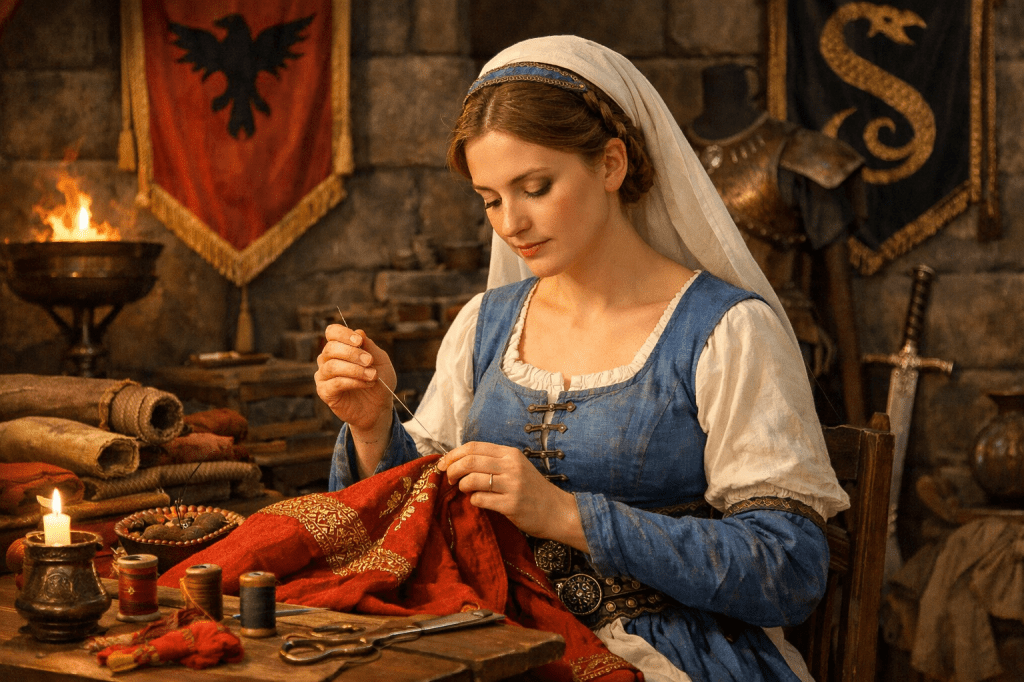
A seamstress lives close to both survival and status. She knows which garments are patched quietly, which are remade to signal wealth, which are altered because bodies have changed through stress or hardship. Clothing is not vanity in Gor; it is protection, caste, and climate made visible. The seamstress touches all of it. Her work tells the story of a city’s health without a single proclamation.
I speak to this not as theory, but from experience. While my calling is that of a scribe, shaped by years as a teacher and historian, there were times—particularly in the North—when scholarship mattered far less than endurance. In those places, survival was not about politics or rhetoric. It was about warmth, about clothing that held together, about work done with numb fingers. I worked as a seamstress then not as an affectation, but because the work needed doing. No one survived because of a well-argued scroll. People endured because someone could sew.
That truth sits at the heart of Gor.
A fisherman understands the city’s relationship with the world beyond its walls. He knows the moods of water and weather, the seasons when nets come back full or empty, the difference between natural scarcity and something gone wrong. When fish vanish, it is not abstract. It is immediate. A fisherman brings the outside world into the city one catch at a time, and in doing so makes borders feel real.

A blacksmith sees the city’s priorities reflected in metal. Tools before ornaments. Repairs before new work. Weapons sharpened too often. Plow blades neglected. A blacksmith does not need to be told when unrest is coming. He hears it in the ring of steel and the urgency of orders. His forge becomes a quiet barometer of tension long before banners are raised.
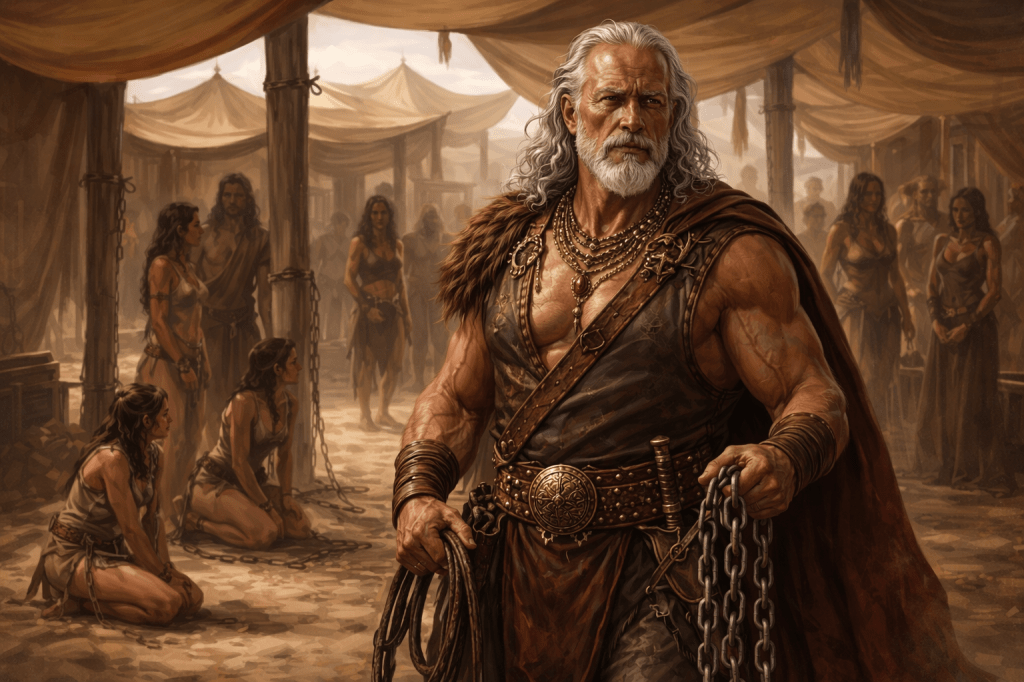
The slaver is foundational when played honestly. Slavers sit at the intersection of economy, law, and domination. They know which households are buying, which are selling, which are desperate, and which are posturing. A slaver’s work reveals a city’s moral weather more accurately than its speeches ever will. When that role is played with care rather than sensationalism, it adds weight and discomfort where it belongs.
What all of these roles share is this: they reward attention over ambition.
Low-caste roleplay thrives on routine, observation, and consequence. It allows players to notice small changes and let those changes accumulate. A baker stretching grain, a fisherman repairing nets more often than usual, a seamstress patching instead of replacing, a blacksmith working longer hours for less pay. These are not background details. They are the story unfolding at ground level.
Low castes also allow players to play people, not platforms.
There is room for irritation, humor, pride in craft, fatigue, and stubborn dignity. A baker can complain without it becoming political. A seamstress can gossip without scheming. A fisherman can distrust outsiders without declaring war. These characters feel human because they are not required to perform importance. Their importance comes from being necessary.
They also carry the city’s memory. High castes change. Leaders fall. Policies reverse. Low castes remain. They remember lean years, hard winters, past mistakes. Tradition survives not because it is declared, but because it is practiced daily by those who never left.
Cities that neglect low-caste roleplay often feel fast and hollow. Supplies appear when needed. Distance collapses. Consequences vanish. Everything works because it must. Cities built on a strong foundation feel slower… but richer. Things take time. Errors linger. Success has cost.
That is not inconvenience. That is immersion.
Low castes are not lesser roles. They are load-bearing ones. They make the world resist just enough to feel real. And because they live where work, routine, and consequence intersect, they are not only necessary… they are genuinely enjoyable to play.
If a city is a living thing, the low castes are its bones and blood. You can decorate the surface endlessly, but without a foundation, nothing stands for long.
Build from the bottom, and the city will rise on its own.
Should any wish to speak with me directly on these matters, my door remains open. I am willing to listen, to discuss, and to engage in good faith with those who approach with sincerity.
By my hand,
Lady Jessie SpiritWeaver
Historian
Caste of Scribes
Resident of the Isle of Teletus


 The Gorean Measure
Leave a comment